Content By-Diaz Markussen
Are you considering laser eye surgical procedure however don't recognize where to begin? It might seem like a complex choice, however understanding the differences between two of the most usual treatments-- LASIK and PRK-- can aid you make an enlightened choice. Like 2 sides of the very same coin, these procedures have distinctive benefits and negative aspects that must be weighed very carefully. Allow's dive in and explore what establishes them apart.
When it concerns laser eye surgical procedure, there are many options available to those looking to improve their vision. But for several, the decision frequently comes down to two of one of the most popular procedures: LASIK and PRK. While they share some resemblances, each has its own distinct benefits and drawbacks that need to be taken into consideration when making a final decision.
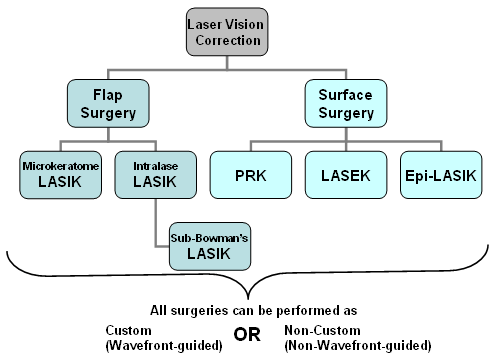
Both LASIK and PRK entail utilizing lasers to reshape the cornea in order to enhance vision. However, their techniques differ in how they access this part of the eye-- a crucial distinction that can make or break your experience with either procedure. By breaking down these distinctions, individuals can obtain a better idea of which choice is best for them.
1. Summary Of Lasik
Lasik is one of the most usual type of laser eye surgical procedure. It uses a laser to reshape the cornea in order to remedy vision issues such as nearsightedness, farsightedness, and astigmatism. The procedure does not need any kind of tissue removal, and it can typically be completed within minutes. Throughout the procedure, numbing declines are used to stop discomfort, and clients will frequently experience enhanced vision nearly immediately later on.
The 2nd type of laser eye surgical treatment is called PRK (photorefractive keratectomy). This procedure likewise utilizes a laser to improve the cornea however entails mild cells removal as opposed to treating just the surface area like with LASIK. It usually takes longer for patients to recoup from PRK than from LASIK, since it requires a longer recovery time for the cells to grow back over the improved area of the cornea. However, both surgical treatments are very reliable in fixing vision problems and bring back clear vision.
2. Review Of Prk
Have you ever questioned what the distinction is in between Lasik and PRK? Allow's check out the review of the last procedure.
PRK, brief for Photorefractive keratectomy, is a kind of laser eye surgery that improves the cornea to decrease and even remove your need for glasses or contacts. Unlike Lasik, which utilizes a blade to reduce a flap in the cornea prior to reshaping it with a laser, PRK does not include reducing a flap in the cornea - rather, it removes just a really little layer of cells from the surface area of the cornea. This makes PRK more suitable for individuals who have thin corneas or large students.
The actual PRK procedure takes about 10 mins per eye and is generally done on an outpatient basis. After numbing Doctor are carried out, an excimer laser light beam is used to get rid of small quantities of cells from the surface of your eye. The size of time it takes your eyes to heal depends on exactly how serious your vision trouble was before surgery - if you had moderate myopia (nearsightedness) it might take just one week for your vision to enhance whereas if you had serious nearsightedness it can occupy to three months.
3. Contrast Of Lasik And Prk
Shocking as it may be, more than 1.5 million Lasik and PRK surgeries are done yearly in the USA alone. Comparing both laser eye surgical treatments is essential in order to figure out which one will certainly offer the most effective outcomes for a person's vision needs.
Lasik and PRK both make use of a laser to reshape the cornea, eventually improving vision. Nevertheless, there are Clearer Vision between them:
• Lasik uses a tiny flap on the surface of the cornea, while PRK eliminates the outer layer of cells from the corneal surface.
• Lasik has a quicker recuperation time and creates better outcomes sooner than PRK.
• PRK brings less threats however likewise has a longer recovery time and more pain throughout recovery than Lasik does.
In addition to these distinctions, there are some other things to think about when contrasting Lasik and PRK laser eye surgical procedure treatments. Lasik appropriates for people with thinner corneas and milder levels of myopia or astigmatism, while PRK is usually far better matched for those with thicker corneas or advanced cases of nearsightedness or astigmatism. In terms of cost, PRK often tends to be somewhat a lot more expensive because of its longer healing period; nonetheless, several insurance coverage strategies cover both procedures just as.
It is necessary for people taking into consideration either procedure to review their options with their eye doctor prior to making any kind of decisions about their vision care plan. The doctor can assist evaluate everyone's distinct circumstance and suggest which treatment would certainly be most efficient for them based on their individual requirements and makeup.
Conclusion
The two most usual laser eye surgical procedures, LASIK and PRK, are both effective therapy options for those seeking vision adjustment. When determining between both, it is very important to consider the benefits and drawbacks of each treatment to establish which choice is best matched for your very own demands.
Picking in between LASIK and PRK resembles picking in between two various courses when climbing a hill. On one path, the ascent might be more tough yet the summit view can be a lot more satisfying. On the other course, the climb might be easier but the view from the top might not be as stunning. Likewise, with LASIK and PRK, there are compromises that must be considered depending on your private demands and goals.
At the end of the day, whether you go with LASIK or PRK-- and even choose an alternate option-- it's important to bear in mind that you are taking steps to enhance your vision in order to live a better quality life. Each patient should make their very own choice based on their private demands and objectives in order to achieve their preferred end result and appreciate boosted vision without glasses or contacts.